
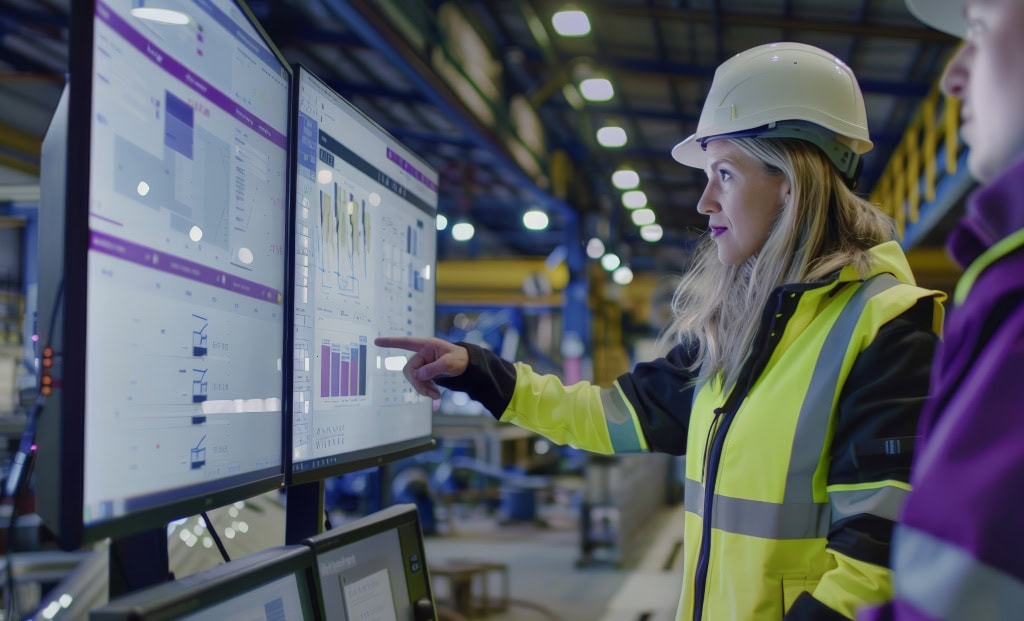
Choosing an ERP is a major decision for any manufacturer. But before jumping into ERP features, pricing, and vendors, manufacturers should first understand what is happening inside their own operations. The right ERP should address measurable business challenges, not merely offer a long list of features and capabilities. Establishing key performance indicators (KPIs) before starting the ERP selection process makes it easier to identify the right solution and to measure its impact after implementation.
Inventory Accuracy and Carrying Costs
Start by measuring inventory accuracy, stockouts, excess inventory, obsolete inventory, inventory turnover, inventory ageing and carrying costs.
Frequent discrepancies between physical and system inventory can indicate weaknesses in inventory control. Manufacturers should look for an ERP that provides real-time inventory visibility, lot and serial tracking, replenishment planning, and stronger warehouse controls.
Production Efficiency and Capacity
Measure production throughput, machine utilization, labor utilization, downtime, setup time, scrap, rework, and OEE.
Track how frequently production schedules change because of material shortages, machine availability, rush orders, or unexpected delays. These measurements can reveal the need for better MRP, production scheduling, capacity planning, and shop-floor visibility.
On-Time Delivery and Lead Times
Track on-time delivery percentage, production lead time, order cycle time, and late orders.
Identify the causes of delays. Is it purchasing? Inventory shortages? Scheduling? Production bottlenecks? An integrated ERP such as OmegaCube ERP can connect sales, purchasing, inventory, production, and scheduling information to provide greater visibility across the entire order lifecycle.
Job and Product Profitability
Revenue alone doesn’t tell manufacturers whether they are making money on every job.
Measure material, labor, overhead, subcontracting, estimated versus actual costs, and margins by job, product, or customer. This is especially important for make-to-order and engineer-to-order manufacturers, where costs can change significantly during production.
Manual Processes and Data Entry
Calculate how much employee time is spent on spreadsheets, duplicate data entry, manual reports, paper-based processes, and searching for information.
These activities create hidden costs while increasing the possibility of errors. An ERP can centralize information and automate workflows across departments.
Financial and Order-to-Cash Performance
Measure quote turnaround time, quote-to-order conversion, order processing time, invoicing delays, accounts receivable days, and cash collection cycles.
Connecting operational and financial data can give manufacturers a clearer picture of how production decisions affect profitability and cash flow.
Turn Your KPIs Into ERP Requirements
Once these measurements are established, manufacturers can create an ERP evaluation checklist based on their actual business needs.
Instead of asking, “Which ERP has the most features?” ask: “Which ERP can improve the KPIs that matter most to our manufacturing business?”
With capabilities spanning manufacturing, inventory, purchasing, sales, scheduling, warehousing, accounting, and analytics, OmegaCube ERP helps manufacturers connect their operations, automate workflows and turn business data into actionable insights.
Your ERP decision should be based on more than a feature checklist.
Measure where your manufacturing operation stands today and choose a system designed to move those numbers in the right direction.
Frequently Asked Questions (FAQs)
Manufacturers should measure inventory accuracy, inventory carrying costs, production efficiency, capacity utilization, on-time delivery, lead times, job profitability, manual processes, and financial performance.
An ERP can help improve inventory accuracy, production efficiency, on-time delivery, lead times, capacity utilization, job costing, order processing, and financial visibility.
Manufacturers should look for an ERP that supports their production model, provides real-time data, integrates key business functions, improves operational visibility, supports reporting and analytics, and can scale with the business.
Manufacturers can establish their current costs for inventory, labor, manual processes, production inefficiencies, late deliveries, errors, and administrative work. They can then compare these baseline costs against expected improvements after ERP implementation.
Ready to evaluate your manufacturing processes? See how OmegaCube ERP can improve visibility, efficiency, and profitability.


4 Responses
Just exploring your services
Interested in Ai ERP
This was actually more useful than I expected. The points about ERP integration were especially interesting.
The point about starting small resonates. We went through a similar hesitation before deciding to move, worried about change fatigue on top of everything else already in flux. What tipped it for us was realizing the alternative wasn’t “no change,” it was slower, messier change through manual workarounds that get harder to unwind every month. Starting with Finance and Inventory first, rather than a full rollout, made the whole decision less binary. For anyone weighing the same choice, this comparison of ERP software options is a useful reference for what a phased approach can look like in practice.