
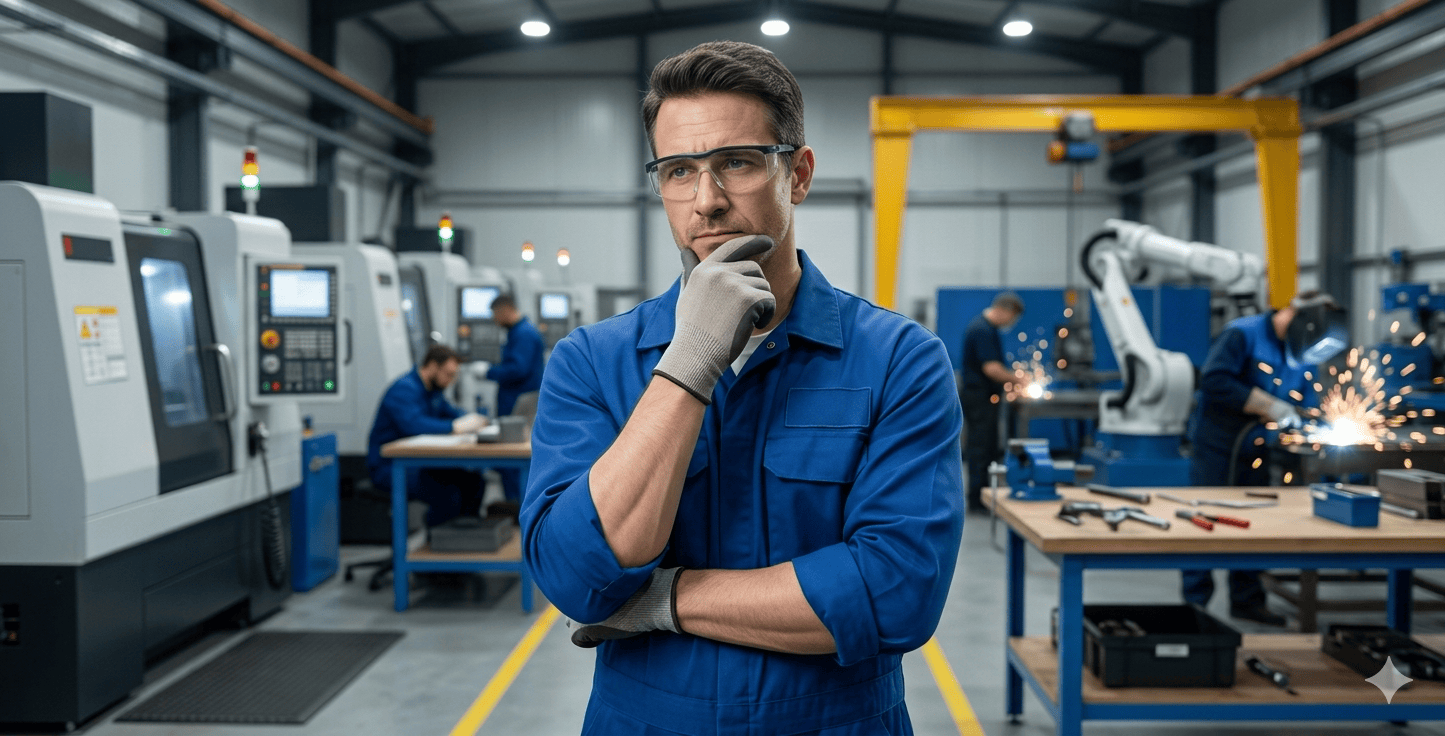
The global manufacturing landscape in 2026 feels like a high-stakes game of Tetris.
The supply chain and raw material pricing have taken a severe hit due to the recent geopolitical shift, ongoing wars, the Strait of Hormuz blockade, and rising domestic and international tariffs.
This has had a cascading impact on American SME manufacturers, who are bracing themselves for a storm of uncertainty. They are hitting the defensive ‘turtle’ manoeuvre, i.e., putting major capital expenditures, such as an ERP purchase, on hold. The prevailing logic is, “Let us wait for the geopolitical dust to settle before we invest.”
But it’s 2026. With market competition at its peak, holding on to the decision of buying an ERP is ‘choosing to fly blind while your competitors use high-tech radar’.
The Allure of the ‘Hold’ Button
It is understandable why a shop owner in the Midwest or a fabricator in Texas might want to conserve cash right now.
Many SME manufacturers are currently:
- Managing Tariff Shock: Trying to absorb the cost of imported raw materials while negotiating price adjustments with customers.
- Avoiding ‘Change Fatigue’: When your organization is already firefighting the existing situation, a new ERP and the entire ERP implementation feel like adding a volcano to the mix.
- Waiting for Stability: Hoping the situation normalizes in the coming days or months.
The Reality Check: While a pause feels safe at the moment, it locks you into manual workarounds, spreadsheets and free apps that make this volatility even more expensive. Holding off on the decision to get an ERP is a high-risk proposition for your enterprise.
Why ‘Getting an ERP Today’ is a Survival Strategy
Modern ERPs are very different from legacy systems that existed decades ago. They are cloud-first, AI-native, and beacons of adaptability and flexibility. Today, an ERP is the ‘nervous system’ of your manufacturing enterprise.
Here is why adopting an ERP, despite the chaos, is a smart move.
Visibility is the Only Antidote to Volatility
If your transit times just jumped by another three weeks or your supplier’s warehouse is hit by a material shortage, a legacy system or a spreadsheet won’t be able to show you the ripple effect on your June production schedule. You will need to manually work the numbers and update the entire schedule, which will take time and cost money.
An ERP, with its real-time shop-floor management and integrated MES, provides an instantaneous view of your enterprise data at every manufacturing stage. Obstacles and shortages are instantly reflected, giving you ample time for course correction.
No more Guesswork
In a world of shifting tariffs, supply chain disruptions and material costs, you need to know exactly what to buy and when. ERPs with their MRP and Production Scheduling features help you proactively plan by allowing you to expand your schedule from ‘day-to-day survival’ to a clear 30-day outlook that adjusts dynamically as variables change.
Fighting ‘Hidden’ Inflation
Inflation isn’t just about the price of steel or copper; it’s about the cost of errors.
With an ERP, manufacturers can,
- Eliminate Manual Data Entry: Reducing administrative overhead and errors.
- Optimize Inventory: Avoiding the ‘just-in-case’ overstocking that ties up your precious working capital.
- Automate EDI & Quality: Streamlining communication with major US aerospace, automotive, or medical device partners.
The Cost of Standing Still
What happens if you wait?
The Competitor Leap: While you wait, your competitors are using modern ERPs to automate their workflows, increase productivity and cash flows. By the time you begin, they will have a two-year data advantage over you.
The Talent Gap: The next generation of US manufacturing talent wants to work in a digital environment. If your shop is still using paper travellers, you will struggle to recruit the new bunch.
The Integration Debt: The longer you wait, the messier your ‘temporary’ workarounds become, making the eventual migration to an ERP even more complex, expensive and painful.
Making the Right Move
‘Agile Pivot’ is the trending word for 2026.
The choice isn’t necessarily ‘Big bang implementation vs. Nothing’, and you don’t have to overhaul your entire operations overnight.
Start with the core modules such as Finance, Inventory and Scheduling to gain the visibility needed to survive this year’s volatility. As the market stabilizes, you can adopt more modules to scale your operations and beat your competition.
Conclusion
Volatility is the new normal. An ERP is not a luxury; it’s a tool that helps you to face the constant market upheavals and ever-changing customer demands. Those who invest now will be the ones reaping the benefits of a streamlined, digital-first operation, while others are still searching for the right sheet or tab in a spreadsheet.
Are you currently leaning toward a ‘Strategic Pause’ or an ‘Agile Pivot’ for your manufacturing enterprise?



4 Responses
Just exploring your services
Interested in Ai ERP
This was actually more useful than I expected. The points about ERP integration were especially interesting.
The point about starting small resonates. We went through a similar hesitation before deciding to move, worried about change fatigue on top of everything else already in flux. What tipped it for us was realizing the alternative wasn’t “no change,” it was slower, messier change through manual workarounds that get harder to unwind every month. Starting with Finance and Inventory first, rather than a full rollout, made the whole decision less binary. For anyone weighing the same choice, this comparison of ERP software options is a useful reference for what a phased approach can look like in practice.