
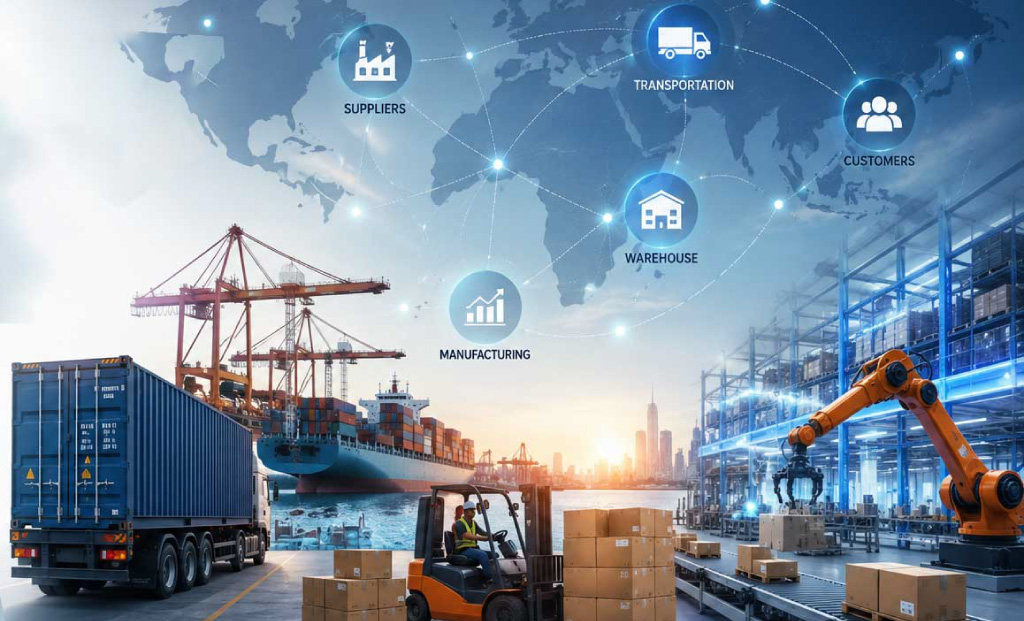
2026 hasn’t been kind to manufacturers, with recent global disruptions displaying the chinks in the traditional supply chain armour. From geopolitical conflicts and shipping bottlenecks to raw material shortages, labor constraints, and unexpected changes in demand, manufacturers have faced challenges that can quickly affect production schedules, costs, and customer commitments.
While disruptions are not in anybody’s control, manufacturers can become better prepared for them. Here are some key supply chain lessons from recent events.
Real-time Supply Chain Visibility Is Critical
One of the biggest lessons from recent disruptions is the importance of knowing what is happening across the supply chain.
Manufacturers need real-time visibility into inventory levels, supplier orders, production schedules, lead times, and customer demand. Without reliable, real-time information, it becomes difficult to identify potential problems before they affect production.
A connected manufacturing ERP can provide a centralized view of purchasing, inventory, production, and sales, helping decision-makers respond faster when conditions change.
Don’t Depend Too Heavily on a Single Supplier
Supplier concentration can create significant risks. When a critical supplier experiences a shutdown, transportation issue, or capacity constraint, manufacturers that have no alternatives may struggle to keep production moving.
Building relationships with multiple qualified suppliers for critical materials can provide greater flexibility. Manufacturers should also regularly evaluate supplier performance, lead times, financial stability, and geographic risks.
Inventory Needs a Strategic Approach
Recent disruptions have highlighted the delicate balance between maintaining sufficient inventory and avoiding excessive stock.
Too little inventory can bring production to a standstill when materials become unavailable. Too much inventory, however, ties up capital and increases carrying costs.
Manufacturers need accurate demand forecasting, inventory visibility, reorder controls, and safety-stock strategies to make smarter inventory decisions.
Agility Matters as Much as Efficiency
Lean manufacturing and efficiency remain important, but recent disruptions have demonstrated that an extremely optimized supply chain can struggle when unexpected events occur.
Manufacturers need processes that can adapt to changing demand, alternative materials, supplier delays, and shifting production priorities. Flexible scheduling and real-time information can help businesses adjust without losing control of operations.
Technology Can Strengthen Supply Chain Resilience
Technology cannot eliminate supply chain disruptions, but it can improve how manufacturers respond to them and become proactive.
A modern ERP system can connect purchasing, inventory, production, sales, and financial information. With better visibility and data-driven decision-making, manufacturers can identify bottlenecks, monitor inventory, evaluate supplier performance, and adjust plans more quickly.
Building a More Resilient Supply Chain
Global disruptions have made one thing clear: resilience should be a strategic priority for manufacturers.
The goal isn’t simply to survive the next disruption. It is to build a supply chain that can adapt when conditions change.
By diversifying suppliers, improving inventory management, increasing visibility, and leveraging manufacturing ERP technology, manufacturers can turn supply chain uncertainty into an opportunity to build stronger, more agile operations.
Frequently Asked Questions (FAQ)
Manufacturers face challenges such as raw material shortages, supplier disruptions, transportation delays, geopolitical uncertainty, fluctuating demand, rising costs, and labor shortages. These disruptions can affect production schedules, inventory levels, and customer deliveries
Recent disruptions have shown manufacturers the importance of supply chain visibility, supplier diversification, strategic inventory management, flexible production planning, and real-time data. Building resilience is essential for responding quickly when unexpected disruptions occur.
An ERP system connects purchasing, inventory, production, sales, and financial data in one platform. This gives manufacturers better visibility into their operations and helps them respond more quickly to material shortages, supplier delays, changing demand, and production bottlenecks.
Depending heavily on one supplier creates a significant risk if that supplier experiences production problems, transportation delays, financial difficulties, or other disruptions. Multiple qualified suppliers can provide manufacturers with alternative sources for critical materials.
Manufacturers should identify critical supply chain risks, diversify key suppliers, establish appropriate safety-stock policies, monitor lead times, improve demand forecasting, and invest in technology that provides real-time operational visibility.
Is Your Supply Chain Ready for the Next Disruption?
Don’t wait for the next supplier delay, material shortage, or demand shift to expose gaps in your processes.
OmegaCube ERP helps you improve visibility, manage inventory, monitor purchasing, and adapt production with confidence.
Get your Demo today.



3 Responses
Just exploring your services
Interested in Ai ERP
This was actually more useful than I expected. The points about ERP integration were especially interesting.