
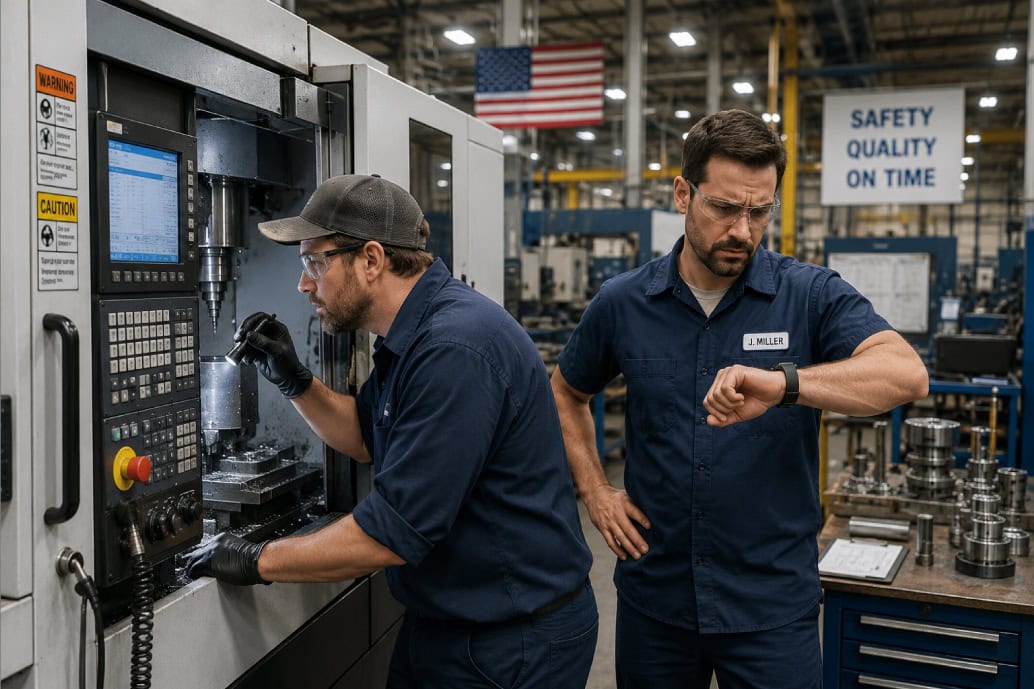
Orders are piling up, lead times are increasing, overtime costs are rising, and yet strangely, some areas of the shop floor seem surprisingly underutilized. Every manufacturer has experienced these.
The issue is not a lack of capacity across the shop floor. Instead, it’s usually a couple or more bottlenecks restricting the production flow. Like a narrow neck of a bottle that limits the liquid flow, a manufacturing bottleneck limits the throughput of the entire production process.
Identifying and addressing these constraints is one of the fastest ways to improve efficiency, increase output and boost productivity.
What Is a Manufacturing Bottleneck?
A bottleneck is an outcome of any resource, process, machine, work center or operation that cannot keep up with the demand placed upon it.
Due to interconnected production processes, a slowdown in one of the processes impacts the rest of the line, creating a backlog that slows output, impacting production, delivery timelines, quality and profit margins.
For example:
- A laser cutting machine may process 300 parts per day, but the downstream welding station can only handle 180.
- A CNC machine may have available capacity, but parts are constantly waiting for inspection.
- Assembly workers may complete products quickly, but packaging cannot keep pace with demand.
In each case, the bottleneck becomes the limiting factor that slows production and impacts delivery performance.
Why Bottlenecks Matter?
Many manufacturers focus on improving efficiency across all departments equally. While this may seem logical, it often produces limited results.
Improving a process that is not a constraint rarely increases overall throughput.
For example:
If a bottleneck work center can produce 100 units per day, increasing a non-bottleneck operation from 150 units to 200 units per day does not increase total production. The facility remains limited to 100 units because the constraint still exists.
This is why bottleneck analysis is so important. It helps manufacturers focus improvement efforts where they will have the greatest impact.
Common Signs of a Bottleneck
Bottlenecks often reveal themselves through recurring operational challenges.
Look for these warning signs:
| Work-In-Progress Inventory Piling Up | Large queues of parts waiting at a particular machine or department are often the most visible sign of a bottleneck. When work arrives faster than it can be processed, inventory accumulates. |
| Frequent Overtime | If a specific department consistently works overtime while others operate normal hours, that area may be struggling to meet demand. |
| Missed Delivery Dates | Bottlenecks create delays that ripple through the entire production schedule, often resulting in late shipments. |
| Underutilized Resources Elsewhere | Machines and employees downstream from the bottleneck may spend time waiting for work because the constraint cannot supply materials fast enough. |
| Constant Expediting | If supervisors regularly move jobs to the front of the queue to meet customer deadlines, a bottleneck may be restricting normal production flow. |
What are the types of Manufacturing Bottlenecks?
Not all bottlenecks are created equal.
| Equipment Bottlenecks These occur when machine capacity cannot meet production demand. Examples include: > CNC machines > Laser cutters > Press brakes > Paint lines > Packaging equipment Equipment bottlenecks are often easier to identify because machine utilization tends to be high. | Labor Bottlenecks A shortage of skilled personnel can limit production just as much as equipment constraints. Examples include: > Certified welders > Experienced machinists > Quality inspectors > Maintenance technicians In many manufacturing environments, labor shortages are becoming increasingly common constraints. |
| Process Bottlenecks Sometimes the issue isn’t equipment or labor but the process itself. Examples include: > Excessive machine setup times > Approval delays > Manual data entry > Inefficient workflows > Poor scheduling practices > Inventory re-ordering and optimization Process bottlenecks often remain hidden because they are not tied to a specific machine or employee. | Material Bottlenecks Production can only move as fast as materials are available. Late supplier deliveries, inventory inaccuracies, and purchasing delays can create bottlenecks that disrupt the entire operation. |
How to Conduct a Bottleneck Analysis?
| Step 1: Map the Production Flow Begin by documenting the entire production process from order entry to shipment. Understanding how materials move through the facility helps identify where delays occur. Ask questions such as: > Where do jobs spend the most time waiting? > Which operations consistently fall behind schedule? > Where does inventory accumulate? | Step 2: Measure Capacity and Throughput Evaluate each work center’s capacity compared to actual demand. Track metrics such as: > Units produced per hour > Machine utilization > Labor utilization > Queue lengths > Setup times > Cycle times The operation with the lowest effective capacity often represents the primary bottleneck. |
| Step 3: Observe the Shop Floor Data is valuable, but direct observation often reveals issues that reports cannot. Walk the shop floor and look for: > Idle workers waiting for materials > Machines waiting for setups > Excessive transportation of materials > Long queues before specific operations Many bottlenecks become obvious when viewed in real time. | Step 4: Analyze Scheduling Data Production schedules frequently reveal hidden constraints. Look for: > Repeated delays at specific work centers > Frequent schedule changes > Jobs consistently finishing later than planned Modern ERP systems can provide visibility into workload distribution and capacity utilization, making bottlenecks easier to identify. |
What are the Strategies for Eliminating Bottlenecks?
Once a bottleneck has been identified, manufacturers can take several approaches.
| Improve Process Efficiency Often the most cost-effective solution is improving the existing process. Examples include: > Reducing setup times > Standardizing procedures > Improving training > Eliminating unnecessary steps Even small efficiency gains at the constraint can significantly increase throughput. | Balance Workloads Some bottlenecks can be reduced by redistributing work to underutilized resources. Cross-training employees and improving scheduling flexibility can help smooth production flow. |
| Increase Capacity When demand consistently exceeds capacity, additional resources may be necessary. Potential solutions include: > Adding equipment > Hiring personnel > Extending operating hours > Outsourcing specific operations These investments should be carefully evaluated to ensure they address the actual constraint. | Improve Scheduling Many bottlenecks are amplified by poor production planning. Advanced scheduling tools can help manufacturers: > Prioritize critical jobs > Optimize machine utilization > Reduce work center overloads > Improve visibility into capacity constraints |
What is the Role of ERP in Bottleneck Analysis?
Identifying bottlenecks becomes much easier when manufacturers have access to accurate, real-time data.
Modern ERP systems provide visibility into:
- Work center capacity
- Production schedules
- Inventory availability
- Labor utilization
- Order status
- Machine performance
Rather than relying on spreadsheets and manual reports, manufacturers can quickly identify constraints and make informed decisions to improve throughput.
ERP systems also enable proactive management by highlighting potential bottlenecks before they begin impacting customer deliveries.
Continuous Improvement Never Ends
One important principle of bottleneck analysis is that constraints often move.
Once one bottleneck is resolved, another area of the operation may become the new limiting factor. This is a normal part of continuous improvement.
The goal is not to eliminate every bottleneck permanently, it is to continually identify and improve the constraints that have the greatest impact on production performance.
Conclusion
Bottlenecks when left unchecked, leads to production delays, increased costs, excess inventory, and dissatisfied customers.
By conducting regular bottleneck analysis, manufacturers can identify what’s slowing production, focus improvement efforts where they matter most, and maximize the return on existing resources.
With OmegaCube ERP, eliminating bottlenecks become easy. With its advanced workflow automation and shop floor management features, data centralization, and real-time updates, supervisors can closely track overall processes, work center operations and resource utilization to look for potential bottlenecks.
Contact us for an in-depth demo.



3 Responses
Just exploring your services
Interested in Ai ERP
This was actually more useful than I expected. The points about ERP integration were especially interesting.